
Article: Ask the Traditional Shamans - With Ayuy-Yu & Samay - Traditional Ki-Shuar Medicine Keeper
Ask the Traditional Shamans - With Ayuy-Yu & Samay - Traditional Ki-Shuar Medicine Keeper
Dear Friends, while this was planned to be a LIVE AMA, due to difficulties in the jungle currently, we will be pre-recording at a time that works better for our guests, and taking questions from Patreon.
If you are not part of our plant medicine education platform, please join us here if you would like to submit a question for our Teachers to answer.
We will post part of the interview here when complete!
If medicine work has moved you - if herbs have healed you - If you seek wholeness from plants and nature, we want you here!
If you've experienced a traditional plant medicine ceremony — in Peru, Costa Rica, Ecuador, or somewhere closer to home — you already know what these traditions can do. Clarity. Grief moved. A door opened that nothing else had opened. For a lot of us, that experience became a turning point.
What's easy to forget once we're back in our regular lives is where that tradition actually came from, and who is still there, holding the line for it.
These ceremonies don't come from a retreat brochure. They come from a forest, and from a body of knowledge passed down over generations — knowledge that includes far more than the ceremonies themselves. Each morning, communities across the Ecuadorian Amazon gather before dawn to share wayusa, a sacred plant tea used for generations to clear the mind, share dreams, and set intention for the day. It's one small, daily part of the same living tradition that many of us have traveled far to experience just once.
That tradition is under direct threat right now. In an area known as Oil Block 28* (see below) — 400,000 hectares of rainforest, home to roughly 15,000 Indigenous people — the forest sits squarely in the path of oil and biofuel development. The people who steward these medicines are the same people standing between them and extraction.
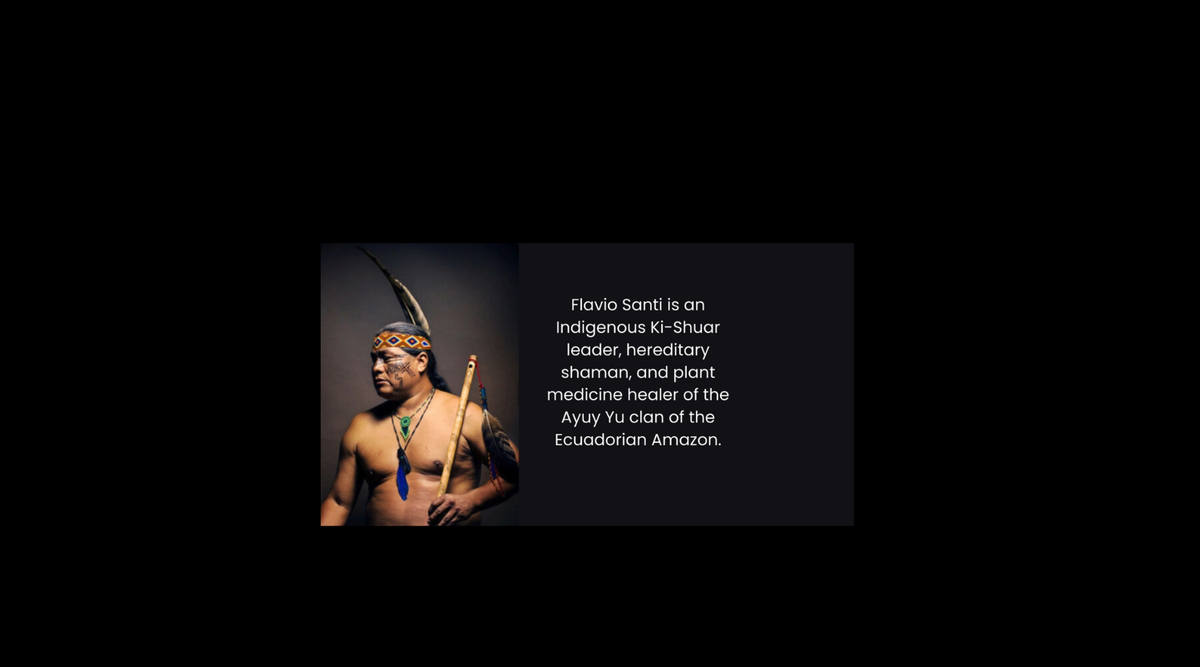
Ayuy-Yu is one of them. A Shuar-Kichwa hereditary healer from Puyo, Pastaza, he's continuing work his own grandfather began generations ago, resisting the industries that would clear this land — and he's already helped reclaim over 1,200 hectares of forest and secure a 183-hectare corridor of protected habitat. He is, quite literally, one of the people keeping the source of this knowledge alive - Through land-back efforts, environmental restoration, school building, traditional knowledge passing, and ceremony.
This is the work Puyuk Runa Foundation exists to fund: moving resources from people who've benefited from Indigenous plant medicine and traditional knowledge back to the people who protect and steward it — not as charity, but as reciprocity. We don't think in grant cycles. We think in the terms Indigenous land stewardship actually requires: not 25 years, but 1,600.
If a plant medicine tradition has ever given you something you couldn't put a price on, here's a way to give something back.
**Oil Block 28 is a contested oil concession in the Ecuadorian Amazon that overlaps directly with Indigenous ancestral territory, including land belonging to the Kichwa community of Sarayaku. Drilling and exploration there carry serious risk of river contamination and deforestation in an already fragile ecosystem — and the concession has drawn international scrutiny for the billions in financing it's received from major asset managers, including BlackRock and Vanguard.


Leave a comment
This site is protected by hCaptcha and the hCaptcha Privacy Policy and Terms of Service apply.